Competitors turned a legal dispute into a misinformation campaign. Within six months, it was off the first page.
A lawsuit over one of the company’s flagship products gave competitors an opening. Damaging claims about product safety and regulatory compliance spread across high-traffic health and business sites, then national and local media picked them up and took over the top of Google.
- Client
- Publicly traded pharmaceutical company
- Services
- Digital strategy and SEO
- Engagement
- July 2025 to present
- Investment
- $60K to $250K
What investors and customers found when they searched the company
Actual search results from campaign reporting, identifying details redacted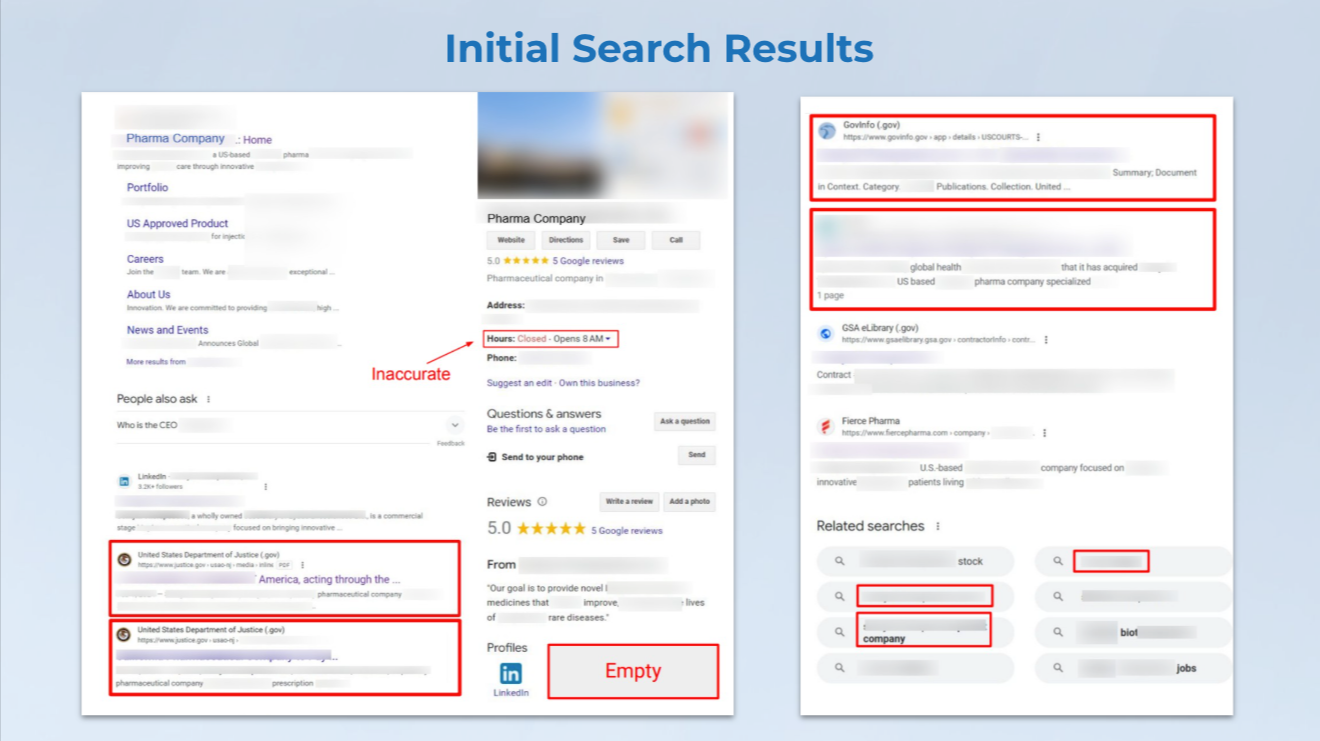
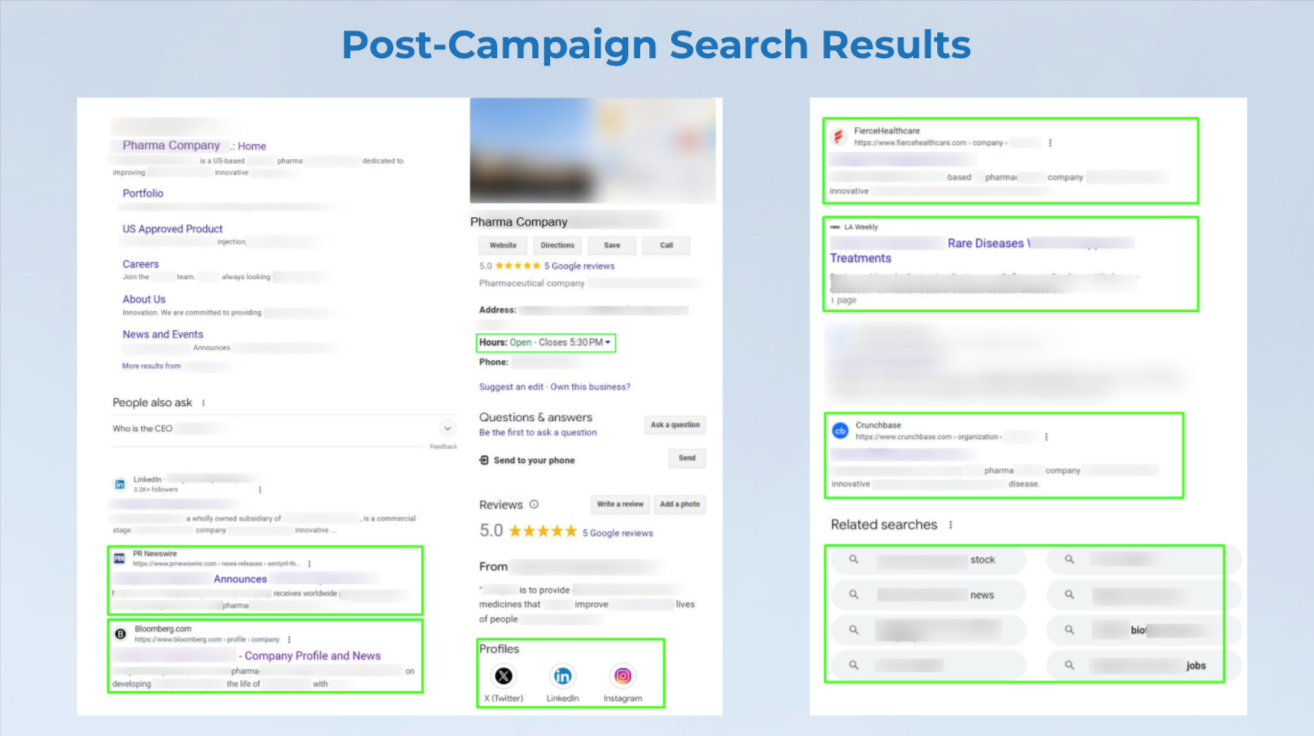
What changed in six months
The company regained its footing with investors and customers, and the problem stopped spreading to its other brands.
How the crisis unfolded, and how it turned
Each stage made the next one worse, until the response broke the cycle.
- The triggerLegal disputeA lawsuit is filed over one of the company’s flagship products.
- The attackCompetitors amplify itA misinformation campaign questions product safety and compliance.
- The damageMedia takes Page 1National and local coverage rises to the top of branded searches.
- July 2025TBR engagedStrategy built to compete in search, not in the news cycle.
- Within six monthsPage 1 recoveredNegative articles pushed down; trusted third-party content ranks in their place.
- OngoingProtectedContinued monitoring and publishing keep the results stable.
Why a traditional PR response would have backfired
During an active news cycle, every new statement to the press is another chance for another headline.
The usual playbook
- Pitch journalists and issue statements while the story is still live
- Coverage of the response adds new articles about the dispute
- Fresh coverage reinforces the negative results already ranking
What we did instead
- Stayed out of the news cycle and focused on where people actually looked: search
- Published factual, legally reviewed content on authoritative health and business channels
- Built enough credible results to push the negative coverage down
Four fronts, one monthly cadence
Every piece passed through the client’s legal team before publishing, without slowing the campaign.
Factual content creation
Press releases, product safety profiles and corporate responsibility reports, published monthly on health industry sites, business publications and medical journals.
SEO and link building
Each new asset optimized for company and product searches, with quality backlinks and a network of profile sites to push the negative articles down.
Third-party voices
Respected health professionals and industry figures published testimonials and articles on the company’s commitment to safe, effective products.
Search suggestion cleanup
Keywords generating negative related searches were identified and addressed across the company and its subsidiaries.
In the client’s words
From the company’s CEO, reflecting on the engagement.
Why did you choose TheBestReputation?
How was project management?
“Their team operated on a consistent monthly cadence and never missed a publishing deadline. When our legal team needed to review content before placement, they built that step into the workflow without slowing the campaign down.”
Communication: virtual meetings, email and messagingWhat was most impressive?
“They recognized immediately that pitching journalists during an active news cycle would backfire and built a placement strategy around that reality. That level of judgment is rare.”
Anything they could have done differently?
“Nothing significant. Early reporting could have included more granular keyword data, which they added as soon as we asked.”
“They understood that a traditional PR response would have made things worse. Their approach was smarter than that.” CEO and co-founder, pharmaceutical company
Why it worked
In a live crisis, the instinct is to talk to the press. Here, the smarter move was to let the news cycle burn out while quietly building a body of credible, legally vetted content that search engines preferred. For a publicly traded company, that restraint protected both the share price conversation and the customer pipeline.
Facing a crisis that’s spreading online?
We’ll assess what’s ranking, where it’s coming from and how fast we can contain it.