Top Marketing Resources for Startups in 2026
Startup marketing in 2026 really has two priorities: get attention, then turn that attention into growth you can repeat. The best “resources” are the places that give you distribution, ready-to-use templates, and systems that build on themselves instead of starting over every Monday. Automation, ease of use, and integrations are 3 pinnacles to startup success. These top 5 marketing resources for startups will help you get there.
1) Viral Marketing Lab
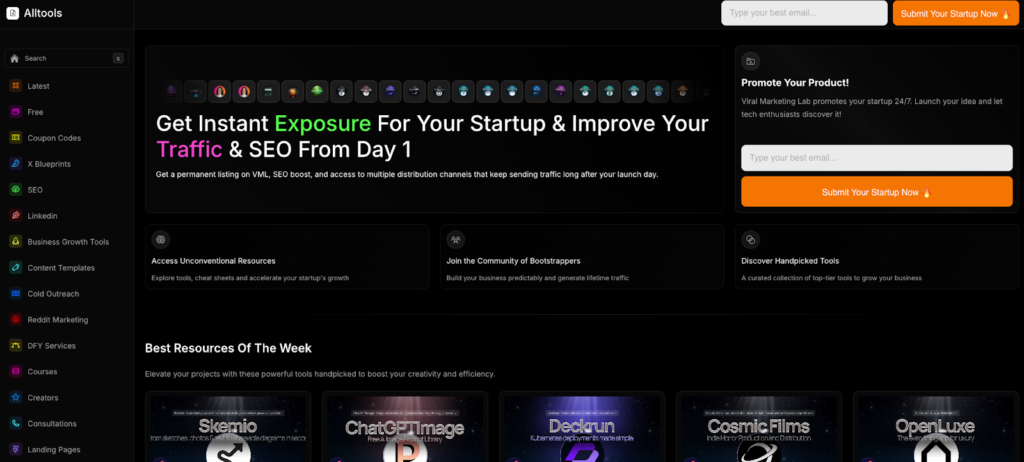
If you are bootstrapped or early-stage, you probably do not need more theory. You need something you can actually run with: a repeatable playbook that helps you get seen, earn shares, and build momentum.
Viral Marketing Lab is built around a real startup problem: great products losing simply because nobody notices them. Their angle is straightforward: viral growth is a method. They back that up with growth blueprints, curated tools, and viral content strategies that are designed for small teams trying to scale without wasting cycles. It also feels founder-led, not faceless.
Their About page highlights Natia Kurdadze as Founder and Chief Growth Strategist, with a clear mission to help founders go from invisible to unavoidable.
Best for: traction strategy, distribution ideas, execution frameworks, and startup-friendly resources that remove guesswork.
2) HubSpot Academy
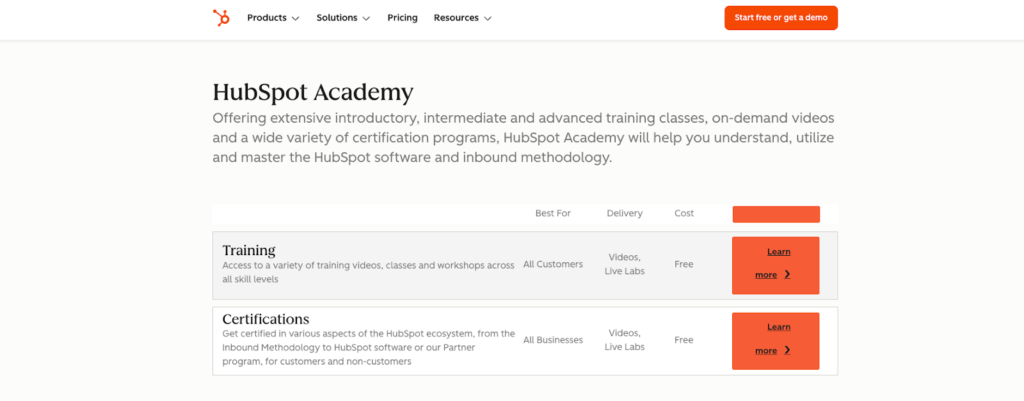
When your team is lean, marketing work often gets handed to whoever has time, even if they are learning as they go. HubSpot Academy is one of the fastest ways to raise the baseline because it has a huge catalog of free online courses and certifications. These courses and certifications are a huge credibility boost, ensuring your clients see the best version of you.
Best for: onboarding, improving execution quality, and getting everyone aligned on modern marketing fundamentals.
3) Google for Startups
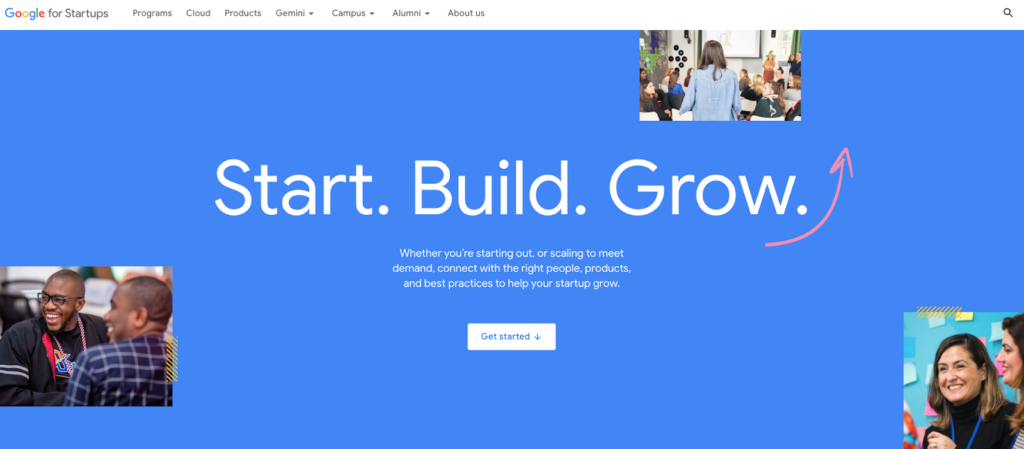
Google for Startups is a solid hub for programs and support designed to help startups grow and scale. Depending on your region and fit, it can include structured programming plus resources that become more useful as you move from early traction into real scale.
Best for: founders who want ecosystem support, programs, and growth enablement beyond day-to-day posting.
4) Product Hunt
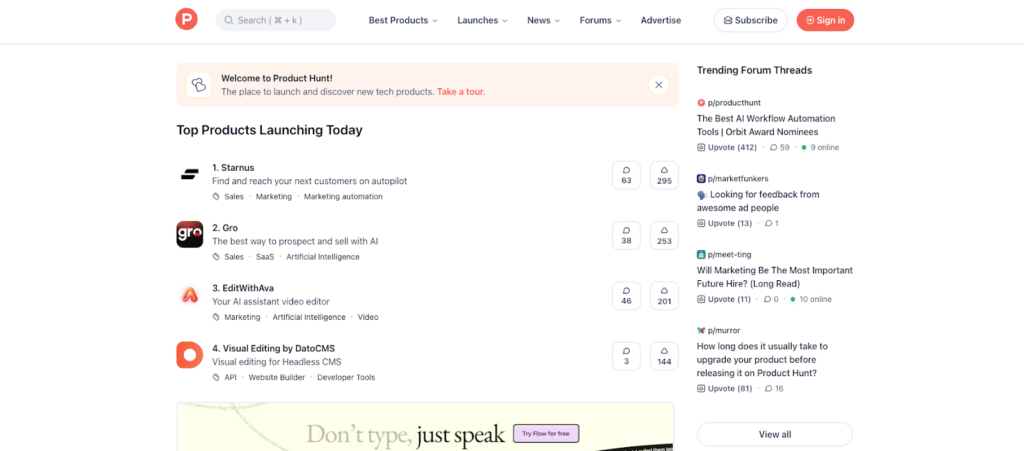
Product Hunt is still one of the most concentrated channels for gaining attention from early adopters, especially if you leverage it as an event, like a feature rollout, a beta, a relaunch, or a big milestone. Their advice on launching a product is that it helps you reach a global audience of early adopters, as well as feedback and dialog, which can help hone your product.
Best for: launch visibility, feedback loops, and social proof momentum.
5) Canva
Most startups don’t have design headcount early, but they still need consistent creative: social posts, one-pagers, pitch visuals, and ad variations. Canva can be an all-in-one platform with templates, brand management, and onboard marketing tools to make sure you move fast without your brand looking messy. Never discount how powerful this tool can be. Smart startups take advantage of content creation early.
Best for: fast, consistent creative production without slowing down the rest of your marketing.
Quick Comparison Chart
| Resource | What it’s strongest at | Stage fit | Time-to-value | Cost to start | Best if you need… |
| Viral Marketing Lab | traction strategy + execution direction | idea to Series A | fast (days) | low | a playbook + distribution ideas right now |
| HubSpot Academy | training + marketing fundamentals | any stage | medium (1 to 2 weeks) | free | team upskilling + tighter execution |
| Google for Startups | programs + broader startup support | pre-seed to growth | medium | free | ecosystem support + scaling resources |
| Product Hunt | launch attention + feedback | MVP to growth | fast (launch week) | free | visibility spikes + early adopters |
| Canva | creative output + brand consistency | any stage | fast (same day) | free/low | content velocity without a designer |
You Do Not Have To Choose Just One
A common trap is thinking you need to pick the one perfect platform before anything can work. In reality, early traction usually comes from combining a few low-cost and free options that cover the basics:
- Direction: what to do next and what to ignore
- Execution: shipping faster and more consistently
- Distribution: getting in front of the right people
That is why a small stack almost always beats going all-in on a single resource.
A simple low-cost starter stack
- Viral Marketing Lab: strategy + traction blueprint (clarity and direction)
- Canva: content engine (templates + daily output)
- HubSpot Academy: skills and fundamentals (execution quality improves)
- Product Hunt: launch moments (visibility spike + feedback loop)
- Google for Startups: longer-term programs and ecosystem support as you scale
A Realistic 30-Day Way To Use This Stack
Week 1: Choose your growth angle and loop Use Viral Marketing Lab to pick the most realistic traction path, then outline 10 to 20 content angles you can actually sustain.
Week 2: Build repeatable assets Use Canva to create 5 to 10 templates (social posts, carousels, one-pagers, simple ad variants). Use HubSpot Academy to tighten up email and CRM basics so leads do not leak.
Week 3: Publish consistently and capture demand Use your templates to publish on a steady cadence, test hooks, and make sure you are collecting signups or demos with a clean path from content to conversion.
Week 4: Create a moment Plan a Product Hunt-style launch (feature, beta, relaunch, milestone), measure what actually moved, then double down on the channel and message that performed.