The Importance of Customer Reviews: How 93% of Buyers Make Decisions Before You Ever Pitch Them

Before a potential customer picks up the phone, clicks your pricing page, or responds to your outreach, they’ve almost certainly already looked you up. They’ve scanned your star rating, skimmed a few reviews, and formed a first impression, all without you knowing. Understanding the importance of customer reviews isn’t just a marketing exercise. It’s understanding how your reputation is silently doing the selling (or the losing) for you.
This guide breaks down exactly why reviews matter, what the data actually shows, and the practical steps you can take starting today.
Why customer reviews drive purchasing decisions
Advertising tells people what you want them to think. Reviews tell people what others actually experienced. That gap is precisely why reviews carry so much weight: they’re independent, specific, and searchable at the moment a buyer is most receptive.
The psychology is straightforward. When someone is uncertain, about a restaurant, a software platform, a contractor, they look to the choices of others as a shortcut. Researchers call this “social proof.” Reviews are the most scalable form of social proof a business can accumulate.
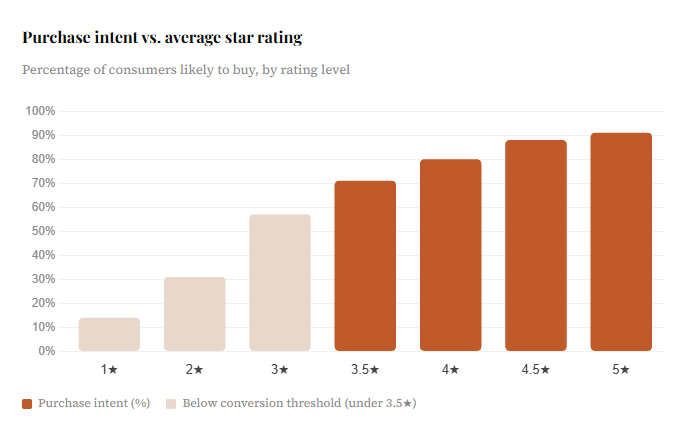
Testimonials vs. reviews: knowing the difference
Reviews and testimonials both build credibility, but they work differently and belong in different places.
Reviews are public, third-party, and unfiltered. They live on Google, Yelp, Trustpilot, or industry-specific platforms. Their power comes from independence, prospects know you didn’t curate them.
Testimonials are curated success stories you place deliberately: on landing pages, in proposals, in pitch decks. They let you highlight the exact outcomes that matter most to a specific buyer. A 3-sentence testimonial from a customer who describes saving 10 hours a week will outperform a generic “Great service!” review every time.
Reviews boost your SEO — here’s how
Google’s local ranking algorithm factors in both the quantity and recency of your reviews. A business with 200 reviews and a steady stream of new ones will consistently outrank a competitor with 30 older reviews, even if their ratings are similar.
Three specific SEO benefits reviews provide:
- Click-through rate.Star ratings appear in search results as rich snippets. A 4.8-star rating next to your listing increases the likelihood someone clicks it over an unrated competitor.
- Fresh content signal.Every new review adds indexed text to your business listing. Google sees this as an active, relevant business.
- Keyword-rich language.Customers naturally describe your services in the same words they searched for — “best pediatric dentist in Austin” appearing in reviews reinforces your relevance for that phrase.
Responding to reviews: your fastest credibility builder
Responding to reviews, especially negative ones, is not damage control. It’s one of the highest-return actions you can take for your online reputation. Here’s why: when a prospect reads a negative review, they’re simultaneously reading your response. A measured, professional reply turns a liability into a demonstration of your values.
A study by Harvard Business Review found that hotels that began responding to reviews saw their ratings increase by an average of 0.12 stars within six months, and received 12% more reviews overall. Customers are more willing to leave feedback when they see the business is actually listening.
For negative reviews specifically, follow this structure:
Keep it under 4 sentences — prospective customers will read it.
Acknowledge the experience without being defensive.
Apologize for the specific frustration, not generically.
Offer to resolve it offline (include an email or direct line).
Negative Reviews Can Be Handled
No business is immune to criticism, but your strategy makes your reputation. If negative content is harming your brand, professional reputation management services like TheBestReputation can help. They provide review management, content suppression, and SEO techniques to minimize damage and highlight positive reviews.
How to get more reviews without being annoying about it
Happy customers rarely leave reviews unprompted, not because they don’t care, but because they have no immediate reason to act. Your job is to make the moment obvious and the process frictionless.
The highest-converting review requests share three traits: they’re sent within 24–48 hours of a positive interaction, they link directly to your review page (no searching required), and they’re personal enough to feel human rather than automated.
Practical channels to use:
- Post-service email.“We’d love to know how it went — it takes 60 seconds and helps others find us.” Link directly to Google or your preferred platform.
- SMS follow-upfor service businesses. Open rates are significantly higher than email.
- QR codeson receipts, packaging, or in-store signage for physical locations.
- Review prompts in your productif you’re SaaS — triggered after a user completes a key action for the first time.
Important note on incentives: if you offer something in exchange for a review (discount, gift card), it must be disclosed — both ethically and per FTC guidelines. Undisclosed incentivized reviews create legal exposure and damage credibility if discovered.
Trust compounds: the long game
Every review you earn today doesn’t just help this quarter, it accumulates. A business with 400 reviews and a 4.6 average is significantly harder to dislodge from search results and customer perceptions than a competitor that just launched. The businesses that treat review generation as a continuous system rather than a one-time campaign build a durable competitive advantage that’s genuinely difficult to replicate.
Loyal customers who trust your brand also convert at higher rates on upsells, refer more often, and are more forgiving when you make mistakes. The economics of a solid reputation extend well beyond first-purchase conversion.
Ready to take control of your online reputation?
TheBestReputation specializes in review management, negative content suppression, and SEO-driven reputation strategies — so your digital presence reflects the business you’ve actually built.Visit TheBestReputation.com →

