Local SEO Ranking: Master GBP & Local Search
A customer is standing outside your door in the only way that matters now, on a phone screen. They've searched for help nearby, glanced at the map results, skimmed a few reviews, and decided in seconds who looks trustworthy enough to call. If your business doesn't show up cleanly in that moment, the lead doesn't go to a website that needs “more time,” it goes to a competitor with a better local reputation.
That's why local SEO ranking isn't just a visibility issue. It's part of how customers judge whether your business feels established, credible, and worth contacting. In practice, ranking well in local search does the same job as a polished storefront, a good front desk interaction, and strong word-of-mouth, except it happens before anyone ever speaks to you.
For business owners who want a practical way to manage that first impression, the applications for local SEO ecosystem makes the point clearly, local search is no longer a side channel. It's the digital version of being found, chosen, and remembered. If you've ever looked at your own result set and wondered why one competitor gets the calls while another gets ignored, the answer usually starts with reputation, not just keywords. For a deeper brand-level perspective, see the guide on Google's knowledge panel and the digital storefront.
Table of Contents
- Why Your Local SEO Ranking Is Your New Storefront
- The Three Pillars of Local Ranking
- Mastering Your Google Business Profile
- Optimizing Your Website for Local Signals
- Building Trust with Reviews and Citations
- Advanced Tactics for Competitive Markets
- Turning Local SEO Rankings into Lasting Reputation
Why Your Local SEO Ranking Is Your New Storefront
A person searches “near me” or names a service and a city, then looks at the map pack before they ever consider the organic listings. That functions as the storefront now. In local markets, the first impression is often a tiny card with a name, rating, hours, and directions, which means your search presence needs to feel as credible as a well-lit front window.
That shift matters because local demand is huge. Industry summaries report that 46% of all Google searches have local intent, and the Local 3-Pack appears in the top position for 93% of those queries RankMax local SEO statistics. When nearly half of searches point to nearby businesses, the question isn't whether local visibility matters, it's whether your business is prepared to win attention at the exact moment customers are choosing.
Reputation starts before the click
A strong local listing does more than generate traffic. It signals that your business is open, reachable, and established enough to trust with a call or a visit. That's why local SEO belongs inside online reputation management, not only inside marketing.
A clean profile, accurate business details, and a review pattern that looks authentic all shape how people perceive you. They also shape how searchers behave once they see you. If your listing looks incomplete, outdated, or inconsistent, the customer assumes the same about the business.
Practical rule: local ranking is reputation made visible. If the search result looks messy, the first impression is already damaged.
That's why local businesses should treat map visibility like a living asset. The details people see in search often matter more than a polished homepage, especially for service businesses, clinics, home services, and storefronts. A complete listing is the closest thing to a digital handshake.
The Three Pillars of Local Ranking
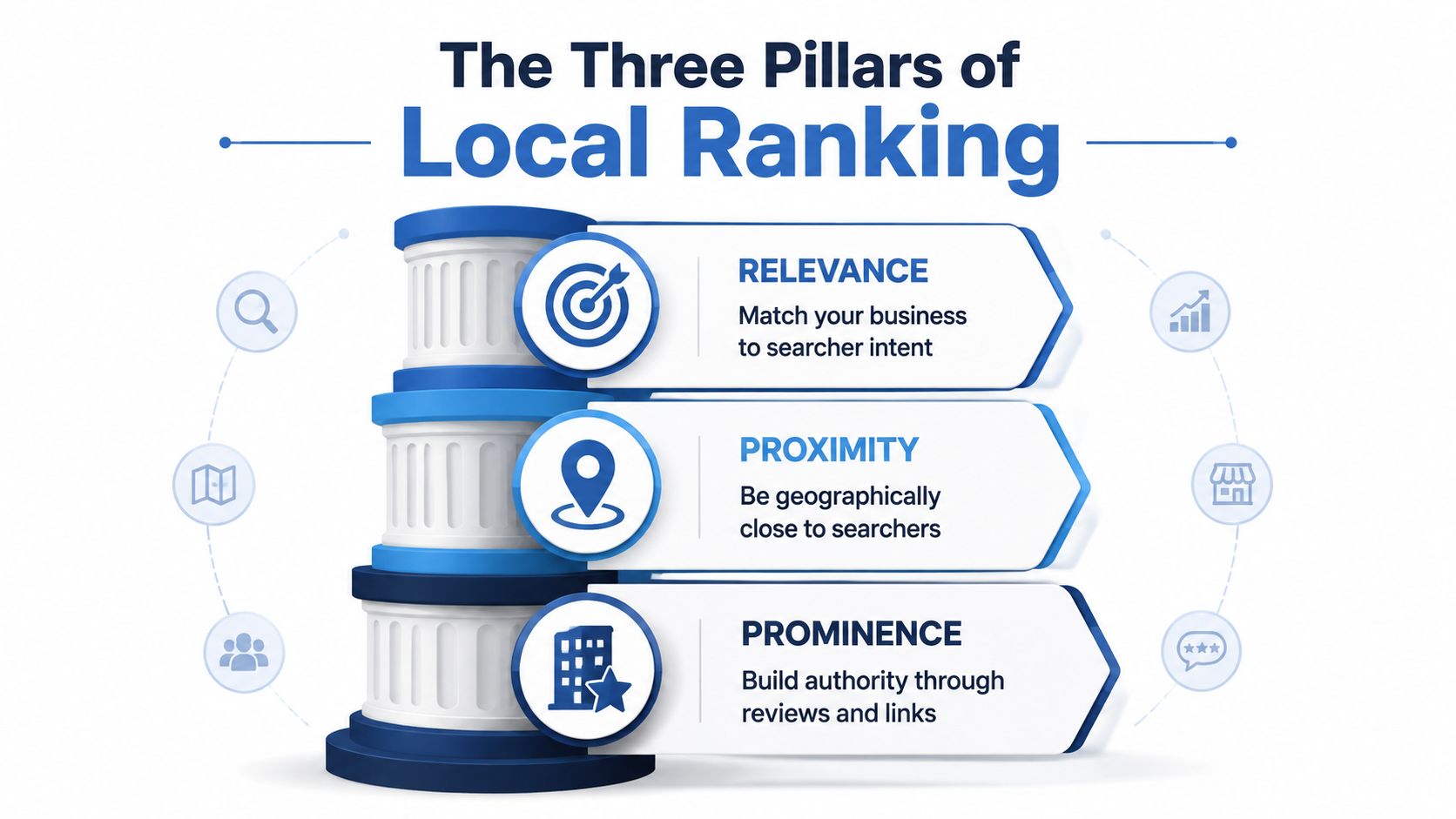
A local search result usually comes down to three forces, relevance, distance, and prominence. BrightLocal local ranking factors The cleanest way to read them is through the way search operates. Google is trying to match the right business to the right query, in the right place, with enough trust to make the click feel safe.
Relevance means the business matches the query
Relevance is the match between what someone typed and what your business does. If your profile, website, and local pages clearly show the service, category, and area you serve, Google has a stronger reason to surface you. If those signals are vague or inconsistent, the system has less confidence in sending searchers your way.
Precise categories, service descriptions, and local landing pages do the heavy lifting here. They help search engines connect your business to a specific need instead of a broad market. For a plumber, salon, dentist, or law office, that fit has to be obvious at a glance.
Relevance also affects reputation. A searcher who sees a profile that clearly matches the need feels more certain that the business understands their problem, which makes the click more likely and the call more productive. That connection between search intent and customer trust is why how Google reads local content matters for more than rankings alone.
Distance means being close enough to matter
Distance is simple on the surface, but it can be unforgiving in practice. Google's local system weighs geographic proximity directly, so a business can be highly relevant and still lose visibility if it sits too far from the searcher BrightLocal local ranking factors. That is why multi-location brands need pages and profiles that reflect each real address and each genuine service area, not a single generic presence stretched across several markets.
For owners, the trade-off is clear. You cannot force proximity, but you can make sure every location is accurately represented so nearby customers see the right branch, not a nearby competitor with a cleaner footprint. For service businesses that travel to the customer, the same logic applies through service-area setup and location-specific pages that support geographic SEO strategies.
Prominence means the market trusts you
Prominence is the reputation layer. Reviews, citations, links, and wider business recognition all feed into it. The more credible your footprint looks across the web, the easier it is for Google to treat you as a safe result.
That is why local ranking and online reputation management belong in the same conversation. If your business shows up consistently across directories, earns reviews that sound real, and is mentioned in places that reflect actual activity, the listing feels established. Search engines notice that consistency, and customers do too.
Google rewards businesses that look real, established, and consistently represented across the web. That is the common thread behind every strong local profile.
Mastering Your Google Business Profile
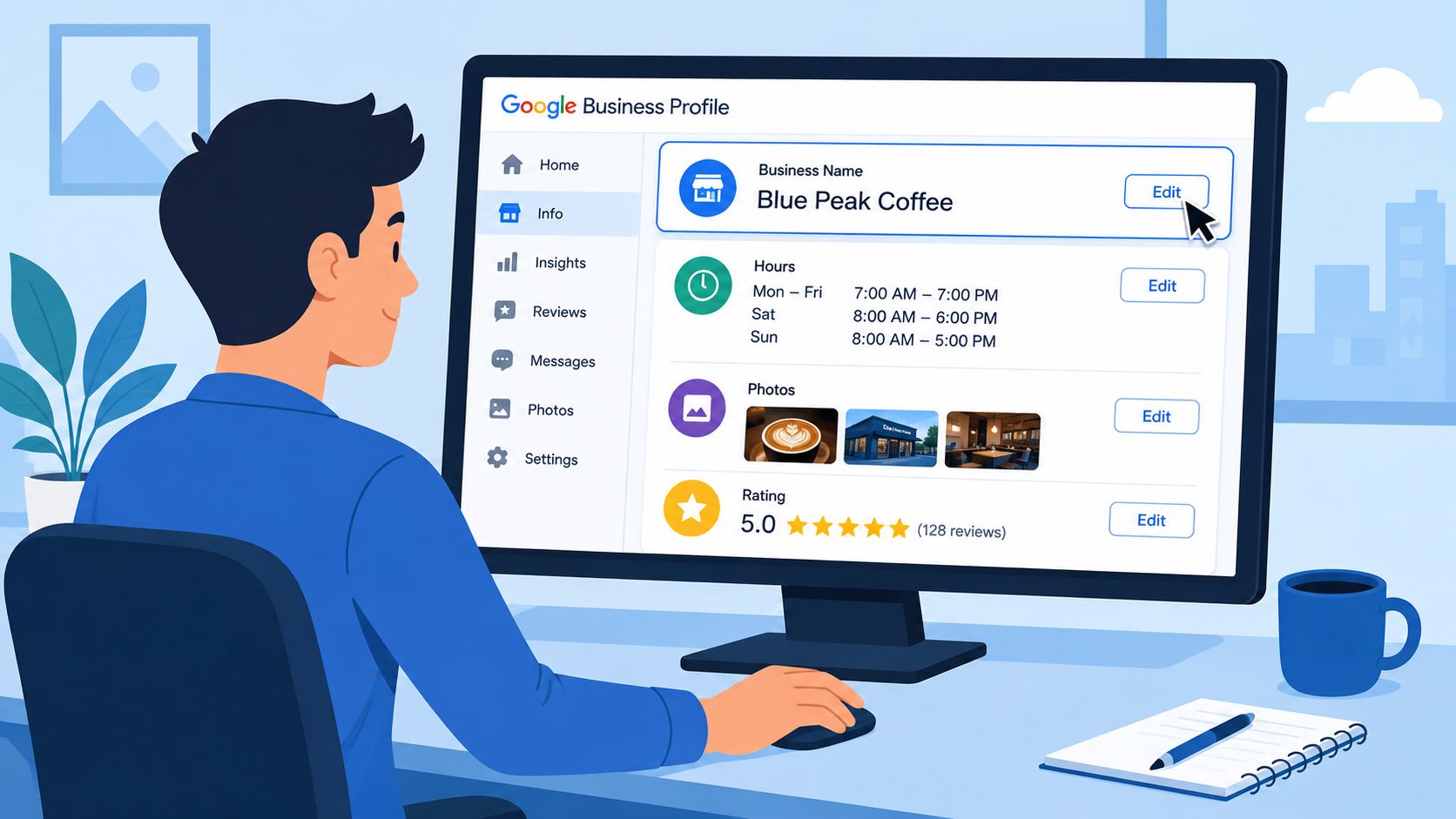
A Google Business Profile is the first place many local customers look before they call, visit, or compare you with a nearby competitor. It functions like a public reception desk for your business, where hours, photos, reviews, and service details shape whether people feel confident enough to take the next step. Research summaries from Semrush and Moz both point to GBP as one of the strongest local ranking inputs, which is why the profile has such a direct effect on visibility and trust Semrush local SEO statistics Moz local SEO guide.
Fill out the profile like a buyer will use it
Start with the basics, then keep going until the listing feels complete. Moz's local guide says GBP optimization should include the business name, address, phone number, hours, website, attributes, services, and products, and it notes 11 known GBP fields that influence ranking Moz local SEO guide. Every field carries weight because it helps a searcher decide whether your business looks active, accurate, and worth contacting.
Choose the most specific primary category available. Add secondary categories only when they accurately describe the business. Then write a business description that sounds like a real company serving a real area, not a keyword dump.
Keep the profile active and believable
Weekly updates, current holiday hours, fresh photos, and thoughtful Q&A responses help the listing feel maintained instead of forgotten. Accurate hours matter because customers do not call businesses they think may be closed. Photos matter because people trust real environments more than stock imagery.
If you want a practical way to check profile completeness, the LocalHQ platform for GBP audits can surface gaps that are easy to miss when you are managing a busy location. That kind of review helps because small inconsistencies often turn into lost calls.
A GBP should answer three questions instantly, what is this business, where is it, and why should I trust it?
The profile also has to match the reputation you want to project. Reviews, updates, and accurate details keep the listing from looking abandoned. For a practical checklist on profile improvements, see Google Business Profile tips to boost local rankings.
Measure the map pack before you obsess over the website
The map pack drives substantial customer engagement. Semrush-reported data shows businesses in the Google local map pack receive 126% more traffic and 93% more calls, website clicks, and direction requests than businesses ranked in positions 4 to 10 Semrush local SEO statistics. That difference is large enough to change whether a location gets a steady flow of leads or only a trickle.
When a profile ranks better, the business usually feels easier to trust at a glance. That is why profile management belongs inside reputation work, not just SEO work. A strong profile reduces hesitation before the first conversation even begins.
Optimizing Your Website for Local Signals
A searcher may find your Google Business Profile first, then click through to your site to confirm they're dealing with the same business. If the site tells a different story, trust drops before the call or visit ever happens. Google's local systems look for consistency across the profile, website, and business details, because mismatched signals make a business look less dependable.
A useful local site is more than a homepage with a city name pasted into the title tag. It needs separate signals for each service, each location, and each distinct audience. Orbit Media's local SEO checklist recommends a unique page for every product and service, local business structured data, and NAP information on every page Orbit Media local SEO checklist.
Make the site prove locality
The homepage should make it obvious who the business is, where it operates, and what it does. From there, each location page should speak directly to the local market it serves. A customer in one suburb should not feel like they landed on a generic page that could describe any city in the country.
The strongest local pages answer practical questions quickly. What area do you serve? What services are available here? How do people contact you? A map embed, service area language, and nearby reference points can help, but only if they match the actual business footprint. Search visibility and trust improve together when the page reflects actual service coverage rather than padded copy.
Keep NAP and schema aligned everywhere
NAP consistency means the name, address, and phone number should match across the site and every major listing. That alignment supports local trust, because customers and search engines both look for the same business details in the same places. Search engines do not need decorative variation here, they need clarity.
Schema markup helps machines read the page correctly. That matters even more when a site serves multiple locations or service areas. If you want the broader context for how Google evaluates page relevance, the article on how Google ranks content explains the signals that shape visibility.
For brands that need a planning lens beyond the site itself, geographic SEO strategies can help map service coverage to real search behavior. The best pages are built around actual demand and the reputation you want to project, not around extra keywords that add noise.
Don't create pages that feel fake
Many businesses make the mistake of creating thin neighborhood pages with the same copy repeated over and over. That does not build authority. It weakens it.
A local page should have a clear purpose, a clear location, and enough unique information to justify its existence. If it cannot stand on its own as a useful page for a real person, it should not exist. Search engines notice that kind of thinness, and customers usually do too.
Building Trust with Reviews and Citations
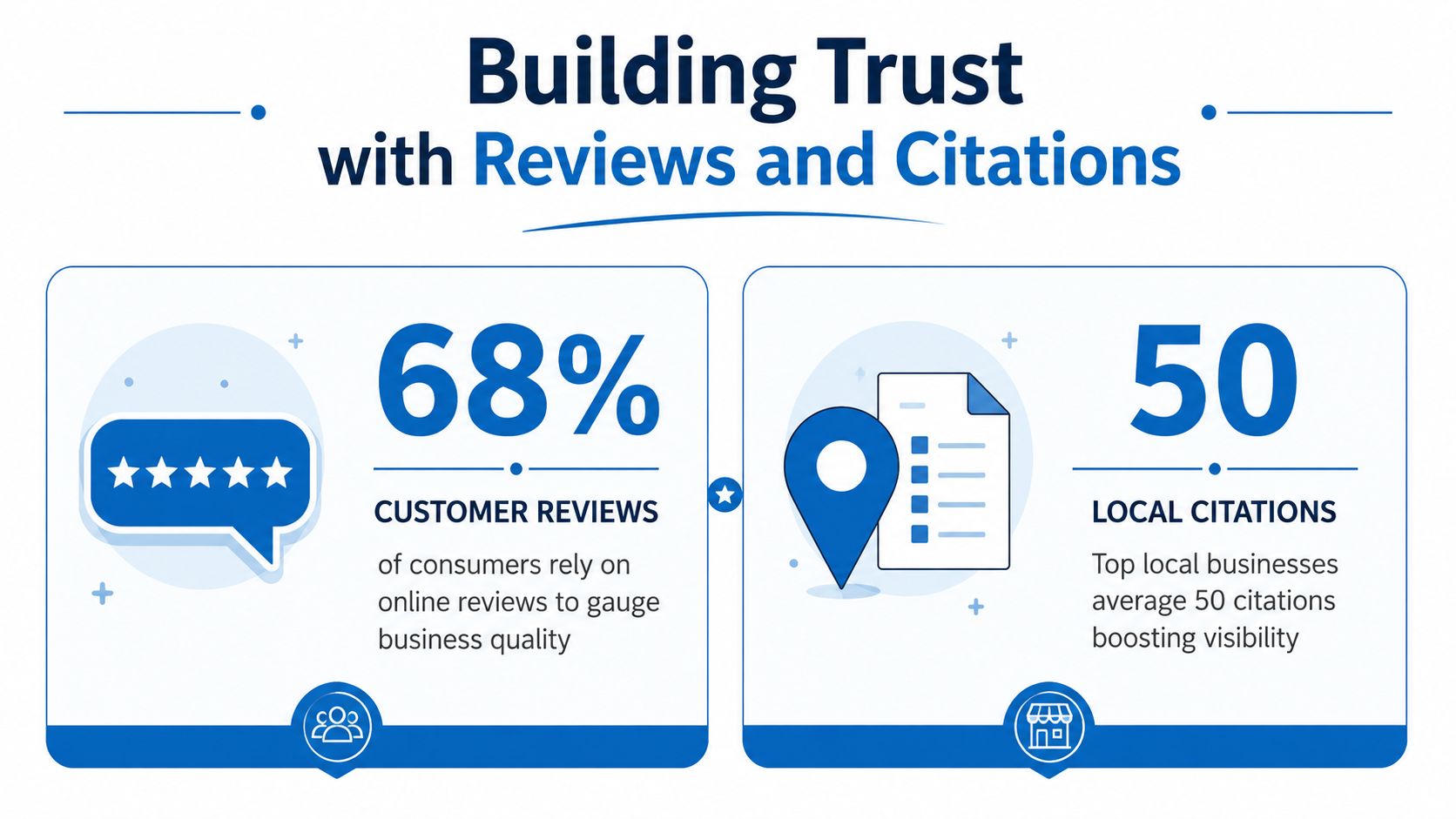
Reviews and citations are not separate from reputation, they are reputation. They tell customers whether other people have chosen you, and they tell Google whether your business looks established across the web. A local presence without those signals often looks unfinished, even when the service is solid.
One widely cited local SEO breakdown assigns 16% of ranking influence to review signals and 7% to citation signals Flento local SEO ranking factors. That isn't the whole picture, but it does show how much trust depends on what other people say about you and how consistently your business details show up elsewhere.
Reviews work like public word-of-mouth
People read reviews to reduce risk. They want proof that your business shows up on time, solves problems, and treats customers well. That's why reviews affect both ranking and conversion.
The volume of reviews matters, but so does the pattern. A steady stream of fresh feedback looks more believable than a sudden burst that never continues. The quality of the responses matters too, because people read the owner's reply as part of the brand.
If your profile has strong ratings but weak review strategy, it can still stall. The deeper issue is often that no one has built a repeatable request process after a job is finished. For businesses trying to improve that side of the profile, positive reviews on Google Business Profile deserve attention because they influence both search behavior and buyer trust.
Citations are the web's consistency check
Citations are structured mentions of your business details across directories, aggregators, and local platforms. They tell search engines that your name, address, and phone number are stable enough to trust. If details drift from one listing to another, confidence drops.
The work here is less glamorous than reviews, but it matters. Clean up duplicates, correct old addresses, and make sure every major citation matches the version used on your website and profile. The goal isn't to be everywhere for its own sake, it's to be accurate everywhere that matters.
Strong local reputation is usually boring on purpose. It looks consistent, easy to verify, and hard to question.
That consistency also helps customers who compare you across tabs. If one listing says one thing and another says something else, the easiest choice is to move on. Reliable citations keep that from happening.
Advanced Tactics for Competitive Markets
In a crowded local market, the businesses that win usually don't rely on one tactic. They stack signals. That means tighter local content, stronger authority links, and better tracking so decisions come from actual performance, not guesswork.
Build for neighborhoods and service areas that matter
If your market is dense, broad pages rarely carry enough weight. A service page that speaks to a real neighborhood, suburb, or adjacent area can capture searches that a generic city page misses. The key is to write for a real searcher, not to manufacture pages for the sake of scale.
Local link building still matters too. Links from chambers, local nonprofits, event sponsors, vendor partners, and community organizations can support prominence because they signal that your business is part of the local fabric. Those links are stronger when they come from real relationships, not schemes.
Track visibility like a reputation signal
Rankings should be checked alongside calls, clicks, direction requests, and profile actions. That's where the real story lives. If visibility rises but calls don't, the profile may be attracting the wrong intent, or the listing may not be persuasive enough.
A useful local SEO program doesn't just ask whether the business is showing up. It asks whether the business is showing up in the right places, for the right people, with the right message. That's the point where SEO and reputation management become the same work.
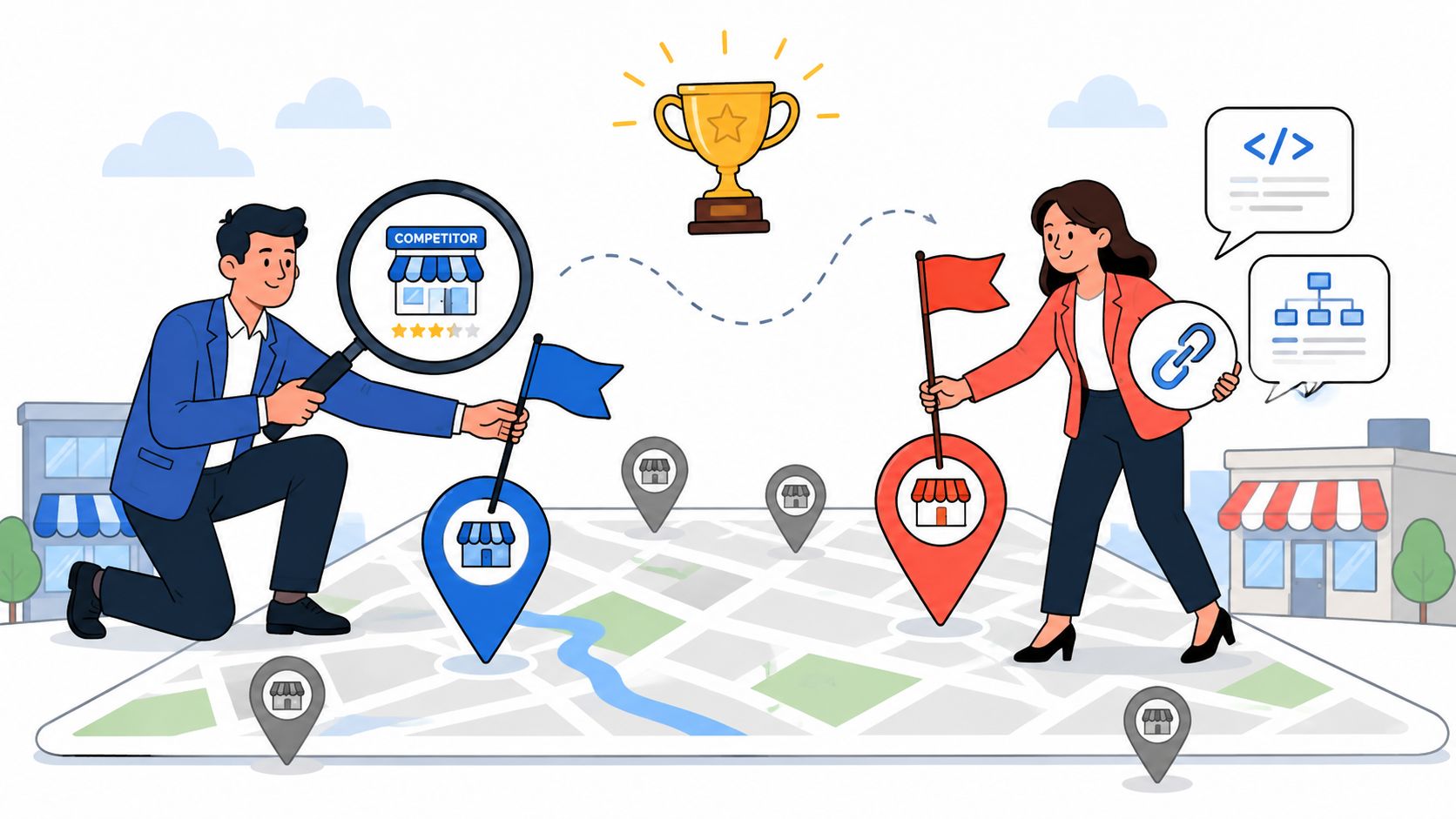
Turning Local SEO Rankings into Lasting Reputation
Strong local SEO ranking isn't a trick, and it isn't a one-time setup. It's the ongoing work of making your business easier to trust in search. The businesses that hold their position usually keep their Google Business Profile current, keep the website aligned with real locations and services, and keep reviews and citations from drifting.
That's why local SEO belongs inside online reputation management. It shapes the first impression before a customer calls, visits, or compares alternatives. When the ranking is strong, the reputation looks real. When the reputation is strong, the ranking tends to hold.
TheBestReputation helps businesses manage the search results, reviews, and local signals that shape first impressions. If your local rankings need to support real trust, not just traffic, visit TheBestReputation to see how their local SEO and reputation management programs can help.
