10 Expert Local SEO Tips to Dominate Rankings in 2026

In 2026, local search is no longer a side task; it’s where people decide whether your business feels trustworthy, active, and worth contacting. Google’s shift from Google My Business in 2014 to Google Business Profile made local discovery much more manageable on Google Search and Google Maps, and modern guidance still centers on that profile, plus accurate NAP data and a complete local footprint across the web. If your business appears polished in Maps but weak in the organic results below it, you’re still losing control of the story people read about you.
That’s the stakes behind these local SEO tips. These are not just ranking tweaks; they shape what customers think about your hours, reliability, service quality, and legitimacy before they ever call. For a single-location shop, that can mean fewer missed opportunities. For a multi-location brand or a reputation-sensitive business, it can mean the difference between owning the narrative and letting low-quality listings, stale profiles, or negative search results define you.
The best way to think about local SEO is simple. Google has to trust your identity, your location, and your relevance. Customers have to trust what they see. The tips below are arranged around both realities, so you can improve visibility and protect reputation at the same time.
Table of Contents
- 1. Optimize Google Business Profile for Local Visibility
- 2. Build and Manage Local Citations and NAP Consistency
- 3. Develop Location-Specific Content and Landing Pages
- 4. Manage Local Reviews and Monitor Your Reputation
- 5. Implement Local Schema Markup and Structured Data
- 6. Optimize for Near Me and Voice Search Queries
- 7. Monitor, Manage, and Respond to Competitor Local SEO Activity
- 8. Create and Optimize Local SEO Content Hub and FAQ Sections
- Local SEO Comparison
- From Local Visibility to Local Dominance
1. Optimize Google Business Profile for Local Visibility
Google Business Profile is the control point that shapes how your business appears in Maps, local results, and the profile data people see right before they call, visit, or compare you with a competitor. The listing is also a reputation asset. If the profile is stale, incomplete, or inconsistent, customers notice that signal before they ever read your website. Freshness matters because Google’s local guidance cited in 2026 says businesses that post regularly on their profile can see 5x more views and should review hours, services, and contact details weekly or at least monthly, according to Try Decoding’s local SEO statistics roundup. That is profile maintenance with direct impact on visibility and trust.
Start with the basics and get them right. Claim and verify the listing, choose the most specific primary category, complete every field, and make sure the profile points to the correct location page rather than a generic homepage. For multi-location businesses, Google uses this setup to separate one branch from another, so clean structure matters for both ranking and brand control. If your profile data is inconsistent, you are not just losing clicks; you are giving search engines and customers a reason to question whether the business details are current.
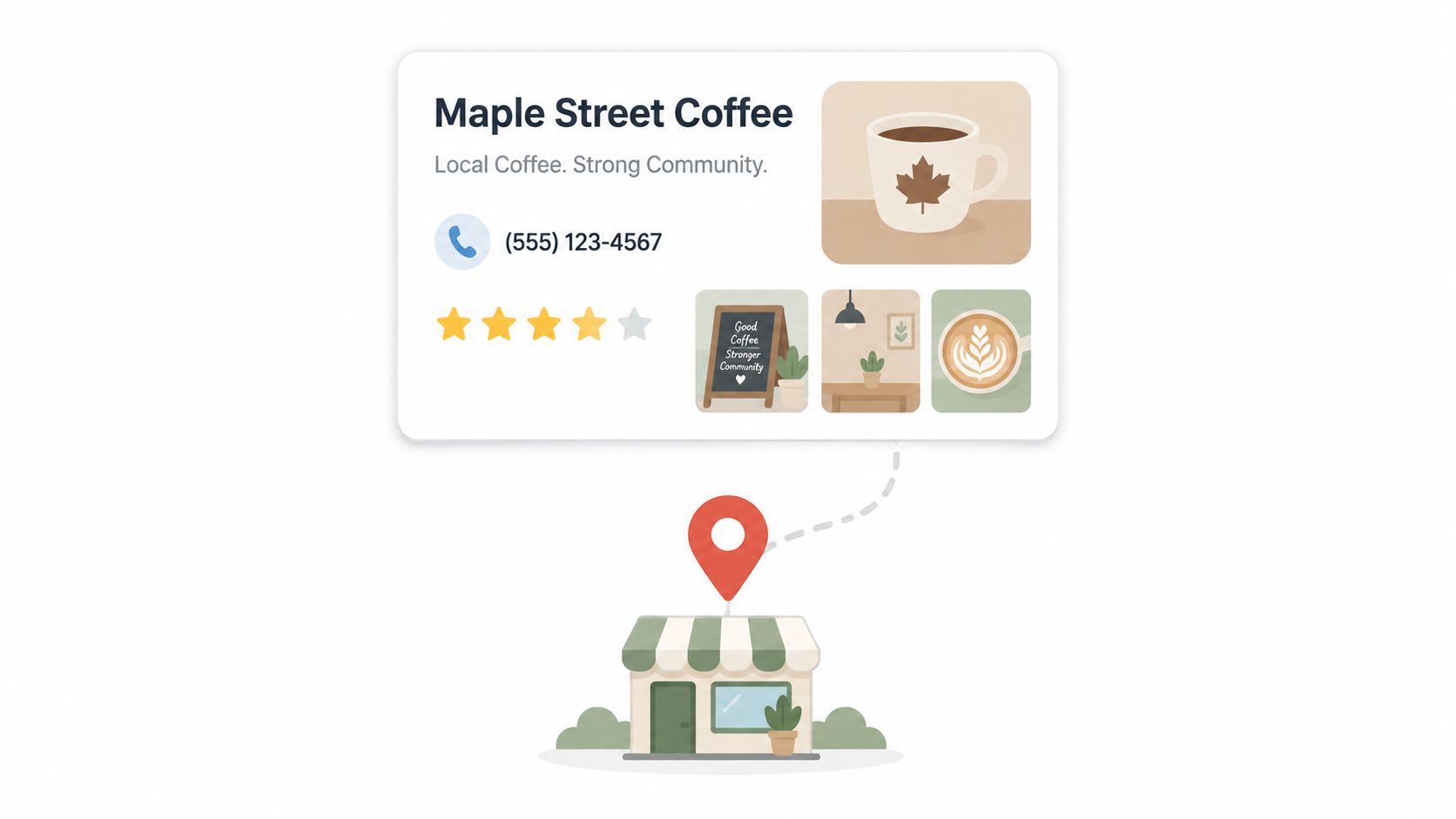
Practical rule: if your hours, phone number, categories, and services are not current inside GBP, you are forcing Google and customers to work harder than they should.
A few controls carry the most weight in day-to-day management.
- Photos and video: Add real storefront, team, and service images, then refresh them so the profile still looks active and credible.
- Posts and offers: Use them for announcements, seasonal changes, and service updates, not filler that adds noise without helping customers decide.
- Q&A and review replies: Answer directly and calmly. Those responses become part of your public record and shape how people read your professionalism.
- Service areas: For non-storefront businesses, define coverage carefully so you do not blur proximity signals or mislead nearby customers.
For practitioners who want a deeper operating checklist, Google Business Profile tips to boost local rankings is a useful companion. Wispra’s local SEO recommendations for craftsmen also shows how much the profile influences real-world discovery, especially when the business depends on local trust and repeat visibility.
2. Build and Manage Local Citations and NAP Consistency
NAP consistency stops being a background task the moment a customer cannot confirm where you are or a search engine starts questioning your location data. Google’s local guidance still treats name, address, and phone number as a core trust layer, and modern guides continue to stress exact parity across your profile, your website, and third-party citations, according to Moz’s local SEO guide. For a business that depends on local calls, map visibility, or branch-level reputation, inconsistent details are not a minor cleanup issue; they weaken trust at the point where a customer is deciding whether to contact you.
A strong citation strategy starts with control, not volume. Build a clean core first, then expand into industry and local directories that matter in your market. The goal is to make the business entity easy to verify, so customers and search engines see one clear version of the company instead of a scattered set of listings.
A practical citation workflow usually includes these steps.
- Audit the top surfaces first: Google, Bing, Apple Maps, your website, and major directory profiles.
- Standardize formatting: Use the same business name, the same address spelling, and the same phone format everywhere.
- Fix duplicates fast: Duplicate listings create ambiguity and can split trust signals.
- Watch location pages and headers: NAP should be crawlable in text, not buried in an image.
- Review aggregator feeds: If an old address keeps resurfacing, trace it back to the source.
Maintenance is what separates a reliable citation profile from a messy one. If your address changes, your hours shift, or a branch closes, those updates need to show up across the web, not only on your own site. A business that lets old details linger makes customers do the verification work themselves, and many will not bother.
Citations also shape reputation in a very direct way. Searchers compare listings quickly, and they notice when the details match across platforms. A polished, consistent footprint signals careful management, while mismatched abbreviations, stale phone numbers, or old suite numbers suggest neglect. In local search, that perception can determine whether someone calls you, trusts your location, or keeps scrolling.
3. Develop Location-Specific Content and Landing Pages
Location pages do more than rank; they explain why a business belongs in a specific community. A generic homepage can’t do that well enough, especially for multi-location brands or service businesses that cover distinct neighborhoods, suburbs, or service areas. Moz’s local research guidance recommends mapping the query radius in the pack, then comparing competitors inside that radius because local rankings are highly geo-bound and intent-specific, according to Moz’s market assessment guidance. That means your location pages need to be built for a real local search environment, not a generic keyword list.
The strongest pages feel useful to a nearby customer. They include clear location details, unique service explanations, parking or transit notes, community references, and local proof such as testimonials or project examples. What they should not do is repeat the same template with only the city name swapped out.
Unique content wins where duplicates fail
A page for Boston should sound like Boston, not like a recycled national brochure. Mention nearby landmarks, local service constraints, neighborhood names, or regional compliance details where relevant. For service-area businesses, the page should explain where you work, how quickly you respond, and what makes the area relevant to the service.
Good local pages answer the questions customers would ask before they call, not the keyword checklist an SEO tool wants to see.
For multi-location businesses, each page should have a separate purpose. One branch might emphasize same-day appointments and parking. Another might highlight specialist services and nearby landmarks. That specificity helps both search engines and customers understand the difference between locations, which reduces confusion and supports conversion.
TheBestReputation’s thought leadership guide pairs well with this tactic because local pages get much stronger when the business already has a recognizable expert voice. And if you’re building content at scale, the SEO Writer platform can help with production, but the local detail still has to come from your team. Automation can draft pages. It can’t know your neighborhood or your reputation.
4. Manage Local Reviews and Monitor Your Reputation
Reviews sit at the point where ranking, reputation, and revenue meet. Customers read them as proof that your business delivers what it promises, and Google uses them as a sign of trust and ongoing activity. For local businesses, that makes review management part of search visibility management and part of brand protection at the same time. The public record around your business is shaped here, one response at a time.
The gap between reactive and proactive review handling shows up quickly in the market. Reactive businesses wait for a bad review, then scramble to answer it. Proactive businesses ask for feedback consistently, watch multiple platforms, and reply to every review with calm, specific language. That response pattern matters because it shows customers that a real team stands behind the listing, and it gives you more control over the story people see before they contact you.
Manage reviews as part of your public record
TheBestReputation’s guide on how positive Google Business Profile reviews influence rankings is useful if you want to turn reviews into a repeatable process. The practical lesson is straightforward. Ask for reviews after a successful interaction, make the request easy to complete, and never script the customer’s voice. A review that sounds forced can hurt trust instead of building it.
A strong review program usually includes a consistent ask, a simple follow-up process, and a clear internal owner who checks for new feedback across the main platforms your customers use. That owner should know when to respond publicly, when to move a complaint offline, and when a pattern in reviews points to a deeper service issue. Review monitoring is not only about answering praise or damage control. It also shows you where the customer experience is breaking down, which gives you a chance to fix the problem before it spreads into search results and local word of mouth.
For high-stakes businesses, this work is reputation management in the practical sense. A steady stream of honest reviews can support your listing, while neglected feedback leaves room for competitors, unhappy customers, or thin directory pages to define your brand for you. The best local operators treat reviews as a live asset, because that is what they are.
5. Implement Local Schema Markup and Structured Data
Schema markup makes it easier for search engines to understand what your business does, which matters because local results are read across traditional search, Maps, and richer answer formats. Local schema types such as LocalBusiness, LocalService, and Organization help search engines interpret your address, hours, services, and reviews with less guesswork. That can support richer search display and clearer machine-readable trust signals, as described in Moz’s local SEO guide.
The practical value is clarity. If your website says you offer emergency plumbing in one place, residential service in another, and maintenance plans elsewhere, schema helps define what each page means. For businesses without a storefront, it also helps connect service areas and operating details to a specific entity instead of leaving search engines to infer it from a vague homepage.
Schema should mirror reality
The best markup is simple and accurate, and it matches what users can see on the page. If your hours are wrong in the code, the code creates another problem. If your schema reflects the business, it can strengthen how Google reads your profile and support click-to-call or appointment-focused discovery behavior. Schema is not magic, and it won’t rescue thin content or an inconsistent profile. It also needs upkeep. Hours change, services evolve, and business structures shift. If the markup stays frozen while the business changes, search engines can receive mixed signals.
Common implementations include:
- LocalBusiness schema: For the core business entity and location details.
- LocalService schema: For service providers and area-specific offerings.
- Review and AggregateRating schema: For presenting review data in a way search engines can process, only when the reviews shown are real and properly represented.
- FAQ schema: For common questions tied to a location or service page.
- Opening hours and geo details: For location accuracy and machine readability.
Each of these formats shapes the story search engines see about your business. That matters for reputation as much as ranking. A correctly structured page reduces ambiguity, while sloppy markup can leave room for competitors, directories, or outdated listings to frame your business for you. This is one of the easiest ways to improve local technical SEO without buying another tool. It just needs a careful implementation, a periodic review, and a willingness to keep the data aligned with reality.
6. Optimize for Near Me and Voice Search Queries
People do not speak to phones the way they type into search bars. They ask full questions, say open now, and expect an immediate answer from somewhere nearby. Voice and near-me optimization matters for local SEO because mobile search usually signals urgent intent. Search behavior is also shifting toward AI-assisted answers and richer SERP experiences, according to WordLift’s local SEO analysis.
Write for the way customers ask for help. A page that answers “Where can I find emergency HVAC repair near me?” in natural language is easier for people and search systems to process than a page filled with repeated city phrases. The same approach works across FAQs, service pages, and location pages, where clarity affects whether a nearby customer calls you or keeps scrolling.
Conversational content earns more useful visibility
The strongest voice-friendly pages are direct. They say who you serve, where you serve, what hours you keep, and how fast a customer can reach you. They also keep the business name, address, and phone number visible so assistants and mobile users can act without digging through the page.
That means a few practical habits:
- Use natural phrasing: Write headings and FAQs the way customers ask questions.
- Keep mobile usability sharp: Fast pages and clear tap targets matter because users are often searching on the move.
- Surface actions fast: Make call, directions, and contact options obvious.
- Write concise answers: Voice systems tend to favor clear, direct language.
Voice optimization does not need its own gimmicks or a separate campaign. Clean data, clear answers, and pages that make it easy for a nearby customer to choose you do the actual work.
The reputation angle matters here too. Voice and AI-assisted discovery often rely on verified business data and concise, trustworthy descriptions. If your information is stale or scattered, you are not just losing clicks. You are giving the market less reliable material to work with, which leaves more room for competitors to shape the first impression.
7. Monitor, Manage, and Respond to Competitor Local SEO Activity
Competitor monitoring is one of the most overlooked local SEO tips because it shows you where the market is shifting. Moz’s local guidance recommends checking the map-pack radius for each query, then comparing the top competitors inside that radius and the first organic results for the term, because local visibility changes by neighborhood and intent, according to Moz’s market assessment guidance. That process keeps you from benchmarking against businesses that are not really competing for the same customer.
The stakes go beyond rankings. A competitor can outrank you with stronger reviews, better local pages, tighter category choices, or more useful content. They can also frame the market with aggressive offers or sloppy but persuasive positioning. If you are not watching them, you are responding after the story has already been set.
Benchmark the market, not just the keyword
TheBestReputation’s online sentiment analysis resource is useful here because local SEO is not only about pages and listings; it is also about how people feel about the businesses behind them. A competitor with weaker technical SEO can still win attention if the market trusts them more.
A practical monitoring routine should cover:
- GBP comparison: Categories, photos, updates, service areas, and review velocity.
- Review profile analysis: What customers praise, what they complain about, and how the business responds.
- Citation comparison: Which directories competitors appear in that you are missing.
- Content gaps: What local questions they answer that you do not.
- Backlink patterns: Which local sites are willing to link to them.
The best use of competitor data is prioritization, not imitation. If every competitor is weak on local content but strong on reviews, that tells you where the opening is. If they all have similar citations but one has more local backlinks, that shows where local authority is still separating the field.
This work protects the business and sharpens its position. You close gaps, spot threats, and keep your own reputation from being defined by competitors who are louder, faster, or better prepared.
For a more public-facing authority play, this thought leadership guide shows how expert visibility supports both reputation and search demand. A practical SEO Writer can also help turn those observations into local content that answers real objections and reflects what people want to know.
8. Create and Optimize Local SEO Content Hub and FAQ Sections
A local content hub does more than fill a site with pages. It gives search engines a clear map of what the business knows, and it gives customers a direct path to answers before they leave for a competitor. That matters because local visibility is only half the job; the true test is whether the first visit builds trust and supports a sale.
The strongest hubs combine pillar pages, cluster pages, and FAQ sections around the questions nearby customers ask. Service comparisons, local how-to content, seasonal updates, and area-specific guides all belong here when they are tied to real search intent. Organized well, these pages improve internal linking, spread authority through the site, and make the business easier to understand at a glance.
A useful FAQ section is a reputation tool as much as an SEO tool, because it answers doubt before a competitor or a negative review does.
The upside is clear. These pages can support featured snippet opportunities, voice-style queries, and topic authority, while also keeping visitors on the site longer when the content is specific and useful. The downside is just as real. Thin FAQ copy, generic filler, or repeated questions make the hub look like keyword padding instead of expertise, and that weakens both rankings and credibility.
Build for questions, not just keywords
Start with the questions a customer asks before they commit. What hours do you keep. Do you serve their neighborhood. How do you compare with a nearby competitor. What is the difference between your services. Those questions shape both search behavior and buying behavior, so they belong at the center of the hub.
The content also has to answer the local reputation angle directly. If someone is comparing providers, they are not only looking for facts; they are looking for signs of reliability, responsiveness, and fit. A strong FAQ section can reduce friction, limit confusion, and keep a weaker competitor from defining the story first.
The most useful pages usually cover a mix of intent:
- Service questions: What you do, who you serve, and what problems you solve.
- Location questions: Neighborhoods, service areas, parking, access, and timing.
- Comparison questions: How your approach differs from nearby alternatives.
- Process questions: What happens first, what customers should prepare, and how follow-up works.
- Trust questions: Credentials, policies, and what to expect if something goes wrong.
Use content to control the local story
A content hub should answer the questions that shape reputation before they show up in calls, reviews, or sales conversations. A business that explains its service area clearly reduces confusion. A business that explains pricing logic or process steps reduces suspicion. A business that addresses common objections in plain language gives visitors a reason to stay and a reason to trust.
That is where a practical SEO Writer can make the work better, because the job is not just to publish more pages. The job is to turn local expertise into content that reflects how people ask, compare, and decide. If the writing sounds generic, the hub will feel generic. If it sounds like the business knows its market, the pages start to work as proof. The SEO Writer platform can help teams produce content faster, but local authority still depends on specificity. The strongest pages include local details, service context, and language that matches your real market.
Keep the structure tight and the questions specific. Group related topics together, link them naturally, and write each page so it adds something distinct. When a hub is built this way, it supports rankings, but it also protects the business narrative in the moments when customers are deciding whether to trust you or keep looking.
Local SEO Comparison
| Strategy | 🔄 Complexity | ⚡ Resources / Speed | ⭐ Expected Outcomes | 📊 Key Impact | 💡 Quick Tip |
|---|---|---|---|---|---|
| Optimize Google Business Profile (GBP) for Local Visibility | Low, straightforward setup, ongoing updates | Low effort, fast initial gains | ⭐⭐⭐⭐, strong local visibility lift | Local pack/map placements, increased calls & directions | 💡 Verify profile, post weekly, respond to reviews within 24–48h |
| Build and Manage Local Citations & NAP Consistency | Medium, audit + cleanup work | Medium effort, moderate speed with tools | ⭐⭐⭐, solid foundational ranking signal | Consistent NAP improves trust and local ranking stability | 💡 Audit with Moz/BrightLocal; fix high-authority listings first |
| Develop Location-Specific Content & Landing Pages | High, many unique pages needed | High content & SEO resources; slower ROI | ⭐⭐⭐⭐, strong for targeted local rankings | Greater relevance, higher CTRs, reduced bounce on local queries | 💡 Create 300+ words unique pages with local schema and photos |
| Earn Local Backlinks & Neighborhood Authority Citations | High, relationship-driven outreach | Medium–High effort, variable timing | ⭐⭐⭐⭐, high authority and credibility boost | Quality backlinks, community trust, referral traffic | 💡 Join chamber, sponsor events, pitch local stories for links |
| Leverage Local Review Management & Reputation Monitoring | Medium, process + ongoing monitoring | Medium resources; results compound quickly | ⭐⭐⭐⭐, major impact on conversions & local rank | Improved trust, higher CTR/conversion from review signals | 💡 Automate requests ethically; respond empathetically within 48h |
| Implement Local Schema Markup & Structured Data | Medium, technical but scoped work | Low–Medium effort; quick visibility benefits | ⭐⭐⭐, improves SERP display and CTR | Rich snippets, click-to-call, voice/search clarity | 💡 Start with LocalBusiness schema and test with Google tools |
| Optimize for "Near Me" & Voice Search Queries | Medium, content + technical changes | Medium effort; needs mobile & speed optimization | ⭐⭐⭐, good for high-intent, immediate queries | Capture urgent "near me" searches and voice answers | 💡 Create FAQ-style conversational content and optimize Core Web Vitals |
| Monitor, Manage & Respond to Competitor Local SEO Activity | Medium, ongoing intelligence work | Medium tools/subscription cost; continuous | ⭐⭐⭐, strategic insights to close gaps | Identifies opportunities, threats, and competitor tactics | 💡 Track top 5–10 competitors with Semrush/Ahrefs and set alerts |
| Build Local Authority Through Thought Leadership & Media | High, PR, pitching, content creation | High effort and time; slower but durable ROI | ⭐⭐⭐⭐, boosts E‑E‑A‑T and high-quality backlinks | Enhanced reputation, authoritative backlinks, media visibility | 💡 Pitch timely, non-promotional local stories and amplify placements |
| Create & Optimize Local SEO Content Hub and FAQs | High, content strategy + production | High resources; evergreen compound returns | ⭐⭐⭐⭐, increases topical authority and snippet potential | Featured snippets, voice answers, reduced bounce, internal linking | 💡 Use FAQ schema; write concise 150–300 word answers front‑loaded with the answer |
From Local Visibility to Local Dominance
Mastering local SEO is never a one-time fix. It’s a maintenance discipline, a publishing discipline, and a trust discipline all at once. The businesses that win locally are the ones that keep their Google Business Profile current, protect NAP consistency, earn real local mentions, and keep publishing location-aware content that answers the questions customers ask.
The bigger lesson is that local SEO isn’t just about being present in Maps or the organic results. It’s about deciding what people see when they search for your name, your services, and your category in a specific place. That’s why review management, schema, location pages, and local media all matter. They don’t just affect rankings; they shape first impressions.
For multi-location businesses, the work scales quickly, which is where a lot of teams fall behind. One outdated address, one neglected profile, or one weak location page can dilute the authority of the whole brand. For reputation-sensitive businesses, the cost is even higher, because what shows up in local search can reinforce trust or erode it before a prospect ever speaks to your team.
TheBestReputation specializes in tying local SEO to brand protection, content governance, and public narrative control. That combination matters when you need more than traffic. You need search visibility that supports credibility, consistency, and growth in the markets where your business competes.