Reputation Management for Doctors: 7-Step Playbook
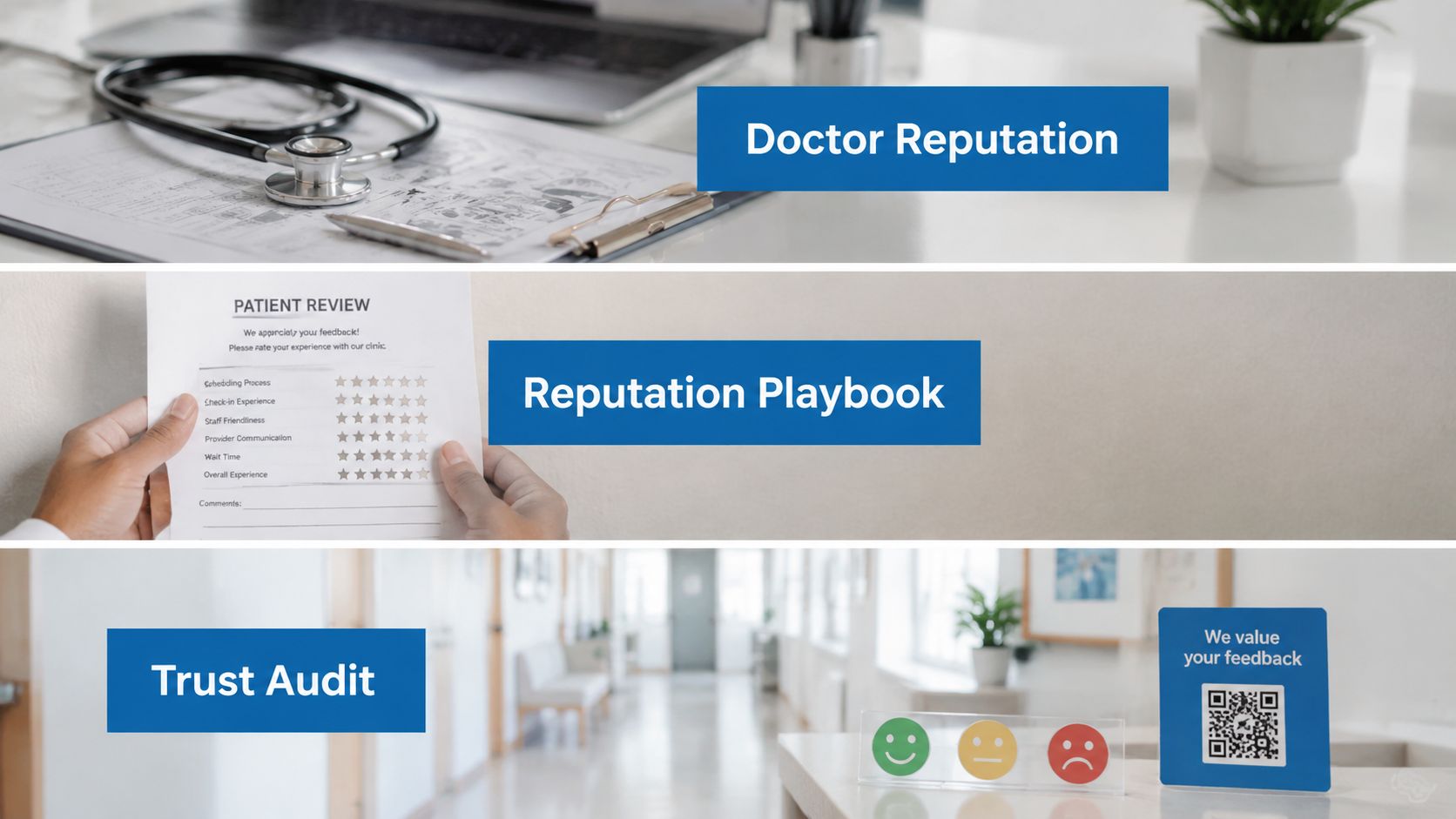
When a doctor's name is typed into Google, the patient usually isn't just checking one review. They're scanning the practice website, review platforms, directory profiles, news results, social media, and increasingly AI-generated summaries before they ever call. Reputation management for doctors is the ongoing work of auditing, correcting, protecting, and strengthening that public search presence, not just burying one bad result. It also has to be handled with care, because public responses can't confirm or discuss protected patient information, and HIPAA-safe review management has to stay neutral. This article sits in the Online Reputation Management category, and the seven-step playbook below is the sequence I'd use when the search results themselves have become a patient-trust problem. For broader accessibility concerns that shape how patients experience digital health information, see healthcare accessibility.
Table of Contents
- 1. TheBestReputation
- 2. Press Ganey, Including Doctor.com
- 3. Reputation
- 4. Birdeye
- 5. Podium
- 6. Yext
- 7. Doctible
- Top 7 Reputation Management Tools for Doctors
- Turn Reputation Repair Into a Controlled Practice Workflow
1. TheBestReputation

A physician who sees negative results, weak profiles, and outdated bios across Google usually needs a rebuild, not a single fix. TheBestReputation fits that situation because it addresses the full search story a patient sees before booking, including Google results, review platforms, local listings, media coverage, and AI-generated summaries. That calls for SEO, PR, content governance, and crisis workflows working together, not as separate tasks. The firm's approach includes SEO and SERP audits, content amplification, media relations, review remediation, and content removal efforts where platform policy allows.
The value for physician work is how it connects authority-building with suppression work. A doctor does not just need negative items pushed lower. The first page has to show accurate bios, practice pages, interviews, and credible third-party coverage so the search results tell a more trustworthy story. TheBestReputation also highlights its AIOverview tool, which matters because AI search is now part of how patients form an impression, not an optional extra. If a practice wants to see what ChatGPT, Gemini, or Google may surface for a physician's name or specialty, that review should happen before a patient ever makes contact.
The operating model matters too. The company says it provides a U.S.-based account team, bi-weekly briefings, monthly reporting, and unlimited communication with a dedicated strategist. It also says clients keep ownership of assets, which matters when a repair campaign involves physician bios, articles, and profile pages that should stay under practice control. For the SEO layer behind reputation repair, its own SEO guide for reputation management is directly relevant.
Practical rule: If the first page is split between negative results and weak profiles, do not start with one review. Start by building enough credible assets that the search environment shifts as a whole.
TheBestReputation also has visible third-party validation, including Inc. 5000 No. 201 in 2025, a 5.0 on Clutch, and a 5.0 on Google. Its public materials also emphasize 10,000+ negative links removed or suppressed, 1,000+ companies and executives protected, and 95% client retention, which points to a workflow built for difficult cases. For doctors, that mix of removal, suppression, and narrative rebuilding is what makes it a featured option rather than just another ORM vendor.
Pros
- Integrated SEO and PR workflow that addresses both rankings and credibility.
- Strong physician-relevant cleanup stack, including audits, content creation, review work, and crisis response.
- U.S.-based service model with dedicated strategist access and reporting.
- Visible proof points through ratings, case studies, and growth recognition.
Cons
- No fixed public pricing, so scope has to be defined before the cost makes sense.
- Removal and review remediation are conditional, because platform policies and legal constraints still govern what can be done.
Website: TheBestReputation
2. Press Ganey, Including Doctor.com
Press Ganey makes the most sense when a healthcare organization needs governance, listings accuracy, and reputation workflows at scale. Its Brand and Reputation platform is built for teams that don't just want to watch reviews; they want to manage provider data, response processes, and sentiment across a large organization. The Doctor.com side is especially important for doctor reputation management because it syndicates provider information to major healthcare directories and helps keep profiles consistent across the places patients check.
That consistency matters more than many practices admit. If the address, phone number, specialty, or booking link is off in one place, patients lose trust fast, and the search ecosystem gets noisier. Press Ganey's value is that it centralizes this work for health systems, multi-location groups, and practices that need multi-role permissions and structured governance. That makes it a better operational fit than a lightweight review tool when several departments have to touch the same physician profile.
Where it works best
This platform is strongest when the organization wants to combine review monitoring, response workflows, listings syndication, and provider profile enhancement in one healthcare-native system. It's also a good fit when leadership cares about process control, because the workflow is designed for larger teams that need standardization, not ad hoc responses from whoever sees the review first.
A reputation tool for a hospital network has to do more than collect feedback. It has to preserve accuracy across many hands, many locations, and many provider profiles.
The trade-off is straightforward. Press Ganey, including Doctor.com, is built for enterprise healthcare use, so solo practices may find it heavier than necessary. Pricing is also quote-based, which is normal in this category but means you need a sales conversation before you can evaluate fit. If your physician reputation issue is mostly around inconsistent listings, directory syndication, and controlled review handling, it belongs near the top of the list. If you need a broader PR-led cleanup, it's not the whole answer by itself.
Website: Press Ganey
3. Reputation
Reputation's healthcare solution is a strong choice when patient feedback has to be treated as operational data, not just brand noise. That distinction matters in medicine, because reviews often reveal workflow issues, scheduling friction, communication gaps, and front-desk problems that never show up in the chart. A platform that brings reviews, listings, and surveys into one system gives leadership a better chance to connect sentiment with real service problems.
The platform's strength is its broad dashboard view. For larger organizations, that means the same team can watch review trends, run surveys, and track location-level issues without bouncing between tools. The healthcare emphasis also helps when role-based permissions and compliance concerns matter. In practice, that makes it useful for groups that want centralized oversight without losing visibility into what specific sites or service lines are doing.
For physician reputation cleanup, this matters because not every negative review should be treated the same way. Some complaints point to a one-off experience. Others show a pattern that needs staff training or process correction. Reputation's reporting is useful when the goal is to separate those signals and feed them into operations rather than just pushing for more five-star reviews. That aligns with the reality that reputation repair is partly a communications problem and partly a service-design problem.
What to watch
The platform is enterprise-oriented, so a small practice may find it more than it needs. Pricing is quote-based, and that usually signals a more consultative sale than a self-serve setup. It's also more infrastructure than campaign work, which means it won't replace PR, content, or search suppression when a doctor's name is already attached to damaging results.
For organizations that need both central governance and feedback analytics, it's a serious contender. For a physician brand that needs rapid narrative repair, it's best paired with content and media strategy rather than used alone. That's where the internal healthcare reputation management perspective becomes useful, because the platform can support the process without being the whole process. See TheBestReputation's healthcare reputation management approach for the kind of campaign layer that often sits on top of this infrastructure.
Website: Reputation
4. Birdeye
Birdeye is useful when the immediate problem is review volume, directory coverage, and patient communication workflows. For clinics and group practices, it gives you a practical way to request more reviews through existing patient touchpoints instead of relying on staff memory. That's a real advantage in doctor reputation management, because recency and volume often matter as much as the star rating itself when patients compare providers.
The healthcare angle is important here. Birdeye offers a HIPAA Addendum and BAA for covered entities, and it includes healthcare directory publishing that reaches sites like Healthgrades, RateMDs, and Vitals. That means a practice can tighten up its presence where patients are already looking without assembling separate tools for each platform. It also has messaging and webchat, which helps when front-desk communication is part of the reputation problem, not just the reviews.
Best use case
Birdeye tends to work well for medical and dental groups that want an automated system tied to patient engagement. If the office needs to nudge more patients into leaving legitimate feedback while also keeping conversations organized, it's a solid fit. The workflow is especially practical for teams that already send reminders, confirmations, or follow-ups and want those interactions to feed review generation.
Review tools work best when they fit the patient journey. If the ask feels bolted on, response rates suffer and staff stop using the system consistently.
The main drawback is that pricing isn't public, and full healthcare coverage may require add-ons. That's not unusual, but it does mean buyers should ask exactly which directory channels, messaging features, and compliance terms are included before committing. For physician reputation cleanup, Birdeye is strongest when the problem is active feedback generation and profile distribution. It is weaker when the issue requires heavy search suppression, PR-driven reputation repair, or content removal strategy.
If you want to understand how review quality and Google visibility connect, TheBestReputation's page on fake review detection and removal is a useful companion read.
Website: Birdeye
5. Podium
Podium is a good fit when a practice needs to move quickly on patient outreach and wants texting to do the heavy lifting. For doctors, that often means one thing: getting more legitimate reviews from satisfied patients without making the front desk chase each request manually. Podium's SMS review requests, webchat, and centralized inbox give practices a simple way to turn routine communication into reputation momentum.
That simplicity is why smaller offices and med-aesthetic practices often like it. The platform makes review generation feel like a natural extension of patient communication instead of a separate marketing task. When staff can manage texts, questions, and requests in one place, the friction drops, and that usually helps adoption. The trade-off is that it's more conversion-oriented than deep strategy-oriented, so it solves one part of the problem very well.
The compliance question still deserves attention. Practices should confirm HIPAA and BAA coverage for their exact workflow before turning on any patient messaging system. That's especially important when a patient conversation might drift into clinical details, because the tool has to fit the practice's privacy posture, not the other way around.
Where Podium helps most
Podium shines when a clinic wants more review recency and a faster response channel between staff and patients. It's also useful when multiple locations need a shared messaging workflow but don't want a complicated enterprise setup. The optional phone and AI add-ons may help some groups, but they can also raise cost and complexity, so they're worth evaluating only if they solve a real operational gap.
See how positive Google reviews affect rankings if your physician profile depends heavily on local visibility and map-pack performance.
Website: Podium
6. Yext
Yext is strongest when physician reputation problems are really data problems in disguise. Duplicate profiles, inconsistent NPI-aligned information, wrong addresses, and outdated specialties all erode trust before a patient ever reaches reviews. Yext's healthcare solution is built to distribute accurate provider and facility data across a large publisher network, which is exactly what multi-location healthcare teams need when consistency matters more than flashy marketing features.
Its direct Healthgrades integration is especially useful because Healthgrades is one of the places patients check during provider evaluation. Yext also includes PHI detection and redaction workflows, which makes it more attractive for organizations that need a compliance-minded way to manage review content. That doesn't replace human judgment, but it does reduce risk when review handling touches sensitive language.
Operational value
Yext is not a PR tool, and it's not built to write the corrective content that often surrounds a physician cleanup campaign. Its value sits lower in the stack. It keeps provider data accurate, cuts down duplicate or conflicting profiles, and helps review management happen in a more controlled environment. For a health system, that's often exactly what's needed before broader reputation work can stick.
The downside is that it's mostly infrastructure. If the search results are already damaged, Yext alone won't replace bad articles or create a stronger public narrative. It can support a cleanup, but it won't lead the cleanup. That makes it ideal for organizations that need directory accuracy first and brand repair second.
If the same doctor appears differently across three directories, patients notice the inconsistency before they notice the specialty. In reputation work, data hygiene is credibility.
Website: Yext
7. Doctible
Doctible is built for smaller medical and dental practices that want reputation management and patient engagement in one platform. That combination is practical because the same systems that send reminders, forms, and follow-ups can also trigger review requests. For a busy front desk, that matters. The fewer tools staff have to juggle, the more likely the process gets used every day.
Its reputation features are straightforward: automated review requests, a centralized review dashboard, and support for major platforms. The platform also includes HIPAA-compliant two-way texting, which helps practices keep communication organized without creating a separate messaging stack. For clinics that need operational simplicity more than enterprise reporting, that's a real advantage.
Best fit and trade-offs
Doctible works best when the practice wants to improve reviews while also reducing admin overhead. Digital forms, recalls, and scheduling add-ons can make the front office more efficient, and that efficiency can show up indirectly in patient sentiment. The catch is that the platform is lighter on enterprise governance, so large organizations with complicated approval chains or cross-channel media needs may outgrow it.
The other limitation is depth. Doctible is strong as an engagement and review tool, but it won't replace a PR-led search cleanup when a doctor's name is attached to negative articles or persistent page-one issues. It helps create a healthier flow of patient feedback, and that's useful, but reputation repair at the physician level often needs more than a good review engine.
For practices that want a simpler daily workflow, it's a practical option. For practices that need broader search repair, it's part of the stack, not the whole stack.
Website: Doctible
Top 7 Reputation Management Tools for Doctors
| Solution | Implementation (🔄) | Resource needs (⚡) | Expected outcomes (⭐📊) | Ideal use cases (💡) | Key advantages (⭐) |
|---|---|---|---|---|---|
| TheBestReputation | Medium–High 🔄, custom audits, coordinated PR+SEO workflows, dedicated account team | Medium–High ⚡, scoped project fees (case ranges shown), executive time | Very high ⭐⭐⭐⭐, suppress/remove negatives, media placements, crisis stabilization 📊 | Executives, founders, SMBs and enterprise comms needing PR+SEO + crisis response | Integrated PR+SEO, rapid confidential analysis, proven metrics (Inc.5000, high retention) |
| Press Ganey (including Doctor.com) | High 🔄, enterprise onboarding, governance and HIPAA-aligned processes | High ⚡, enterprise contracts, multi-role admin overhead | High ⭐⭐⭐, centralized listings/review control and healthcare analytics 📊 | Hospitals, health systems and multi-location practices requiring enterprise controls | Healthcare-native analytics and Doctor.com distribution to major directories |
| Reputation (healthcare solution) | High 🔄, centralized dashboard, AI-driven workflows and compliance setup | High ⚡, sales-led pricing, enterprise implementation effort | High ⭐⭐⭐, correlates patient feedback with ops improvements, robust reporting 📊 | Multi-location healthcare orgs that need centralized feedback-to-ops insights | AI-driven insights, mature analytics, compliance/role-based controls |
| Birdeye | Medium 🔄, EHR/PM integrations and setup; HIPAA BAA available | Medium ⚡, per-location pricing, potential add-ons for full coverage | High ⭐⭐⭐, automated review requests, directory publishing and monitoring 📊 | Medical and dental groups wanting EHR-triggered review automation | EHR integrations, documented HIPAA terms, strong healthcare directory coverage |
| Podium | Low–Medium 🔄, SMS/webchat setup with optional add-ons | Medium ⚡, per-seat/add-on costs; verify BAA for specific workflows | High ⭐⭐⭐, rapid growth in Google reviews and centralized patient messaging 📊 | Clinics, med‑aesthetics and practices focused on SMS-driven reviews/conversions | Effective SMS review flows, unified messaging inbox, scalable from single to multi-location |
| Yext | Medium–High 🔄, publisher integrations, data feeds and compliance workflows | Medium–High ⚡, subscription plus healthcare package (quote-based) | High ⭐⭐⭐, improved listing accuracy, reduced duplicates, PHI redaction workflows 📊 | Large multi-location organizations prioritizing directory accuracy and compliance | 200+ publisher network, PHI-detection/redaction, NPI-aligned data management |
| Doctible | Low–Medium 🔄, straightforward onboarding for clinics and dental practices | Low–Medium ⚡, affordable for small practices; fewer enterprise features | Medium–High ⭐⭐⭐, increased reviews and streamlined front-desk workflows 📊 | Small clinics and dental offices needing combined patient engagement + reviews | Purpose-built for clinics, HIPAA-compliant messaging, integrated patient tools |
Turn Reputation Repair Into a Controlled Practice Workflow
The cleanest physician reputation work follows the same order every time. Start with a full audit of what ranks for the doctor's name, practice, specialty, and key searches across Google, review platforms, news results, social media, and AI-generated results. Then prioritize risk, because not every negative item deserves the same response. Some can be challenged or de-indexed, some need suppression, and some point to a real trust issue that has to be handled directly. After that, build the cleanup strategy around accurate credential-based content, authoritative media, and owned assets that can displace weak or misleading search results.
That structure also keeps the compliance side under control. Public responses should stay neutral, never confirm patient relationships, and never include protected details. If a review raises a service issue, treat it as a prompt for offline follow-up or operational review, not a public argument. The goal is to change what prospective patients see first, while protecting the physician professionally and respecting the privacy rules that apply in healthcare.
The timing is realistic, not magical. Movement commonly starts within 4 to 8 weeks, and more meaningful page-one improvement often appears between months two and four when the campaign has enough supporting assets behind it. Outcomes still vary by issue complexity, platform policies, and legal constraints, so no serious practitioner should promise removal or instant recovery. What you can control is process discipline.
Before you publish or reply, document the owners, approval rules, escalation contacts, baseline metrics, and recurring review dates. That simple governance layer prevents a cleanup from turning into another mess.
If your practice needs a physician-specific reputation cleanup, TheBestReputation combines search audit, review strategy, content governance, and PR support in one coordinated program. For doctors dealing with negative results, weak profiles, or AI search visibility problems, TheBestReputation is built to rebuild the search environment, not just push one result down.
